You're about to create your best presentation ever

Template For Dissertation Proposal Presentation Economics

Create your presentation by reusing one of our great community templates.

Dissertation Proposal Presentation

Transcript: For my dissertation topic, I have chosen to look into the use of psychology in advertising. I have chosen this as I think that it is interesting to learn about different techniques used by advertising companies to sell us products, both obvious, and bordering on subliminal. Examples of psychology in advertising I intend to discover whether psychology in advertising is an innocent marketing tool or whether it is a form of manipulation, to play on the emotions of the consumer. The history of psychology in advertising How it has changed throughout the years Psychology to sell 'bad' products - tobacco/alcohol etc. Psychology to sell products to children - unethical? Whether psychology in advertising is manipulative or just a form of marketing. The future of psychology within advertising What is psychology in advertising? What is psychology? Psychology is the scientific study of mental functions and behaviors with the immediate goal of understanding individuals and groups. Psychology in Advertising Advertisements that play on your emotions and relationships (inducing feelings of inadequacy) How I will research Psychology in Advertising American Psychological Association - Papers/Journals Adbusters - Kalle Lasn, co-founder - Likened psychological methods to 'brainwashing experiments' Commercial Alert - Website about culture Soap, Sex and Cigarettes - Cultural history of American Advertising. Questionnaires about what people think when they see certain advertisements. Marlboro Ferrari Barcode What I intend to find out Psychology in advertising is the above study, except using the results to sell products. Any Questions? I have yet to decide on my dissertation topic, yet I feel that through wide research I will then focus on one aspect. Topics I will research Dissertation Proposal

dissertation proposal presentation

Transcript: ADAMS, A., DAS ROY, R. & MAHBUB, A. (1993) Participatory Methods to Assess Change in Health and Women’s Lives, B Joint Project in Matlab (Dhaka, BRAC-ICDDR). ADAMS, E. & INGHAM, S. (1998) Changing Places: children’s participation in environmental planning, (London, The Children’s Society). Armstrong, D. (2000) A survey of community gardens in upstate New York: implications for health promotion and community development Health and Place, 6, 319–327. Baxter, J. and Eyles, J. (1997) Evaluating qualitative research in social geography: establishing ‘rigour’ in interview analysis. Transactions of the Institute of British Geographers, 22, 505–525. Burgess, J. and Clark, J. 2009. Practitioner evaluations of participatory processes in environmental decision-making. In Jordan, A and Adger, N. (eds) Governance for Sustainability. (CUP Press), 159-190. Burgess, J., Clark, J., Davies, G., Eames, M., Mayer, S., Staley, K., Stirling, A. and Williamson, S. 2007. Deliberative Mapping: exploring a new analytic-deliberative methodology. Public Understanding of Science, 16(3), 299-322. Davies, G. and Burgess, J. 2004. Challenging the ‘view from nowhere’: citizen reflections on specialist expertise in a deliberative process. Health and Place 10, 349-361 Burgess, J., Bedford, T., Hobson, G., Davies, G. and Harrison, C.M. 2003. (Un) sustainable consumption. In Berkhout, F., Leach, M. Scoones, I. (eds) Negotiating Environmental Change: New Perspectives From Social Ccience. Cheltenham: Edward Elgar, 261-292 Clark, J., Burgess, J. and Harrison, C.M. 2000. "I struggled with this money business”: respondents' perspectives on contingent valuation. Ecological Economics, 33, 45-62 Burgess, J., Harrison, C.M. and Filius, P. 1998. Environmental communication and the cultural politics of environmental citizenship. Environment and Planning, A. 30, 1445-1460. Harrison, C.M., Burgess, J. and Filius, P. 1996. Rationalising environmental responsibilities: a comparison of lay publics in the UK and the Netherlands. Global Environmental Change, 6(3), 215-234. Burgess, J. and Harrison, C.M. 1993. The circulation of claims in the cultural politics of environmental change. In Hansen, A. (ed) The Mass Media and Environmental Issues. Leicester: Leicester University Press, 198-221. Burgess, J., Harrison, C.M. and Goldsmith, B. 1990. Pale shadows for policy: the role of qualitative research in environmental planning. In Burgess, R. (ed) Studies in Qualitative Methodology: vol. 2. London: JAI Press, 141-168. Burgess, J., Harrison, C.M. and Limb, M. 1988. People, parks and the urban green: a study of popular meanings and values for open spaces in the city. Urban Studies, 25, 455-473. Hargreaves, T., Burgess, J. Revealing the hidden actors in transitions: Exploring interdisciplinary research activities as part of transition processes’ Paper to the 1st European Conference on Sustainability Transitions: ‘Dynamics and Governance of Transitions to Sustainability’. Amsterdam, June 2009. Dickinson, J., Duma, S., Paulsen, H., Rilveria, L., Twiss, J. and Weinman, T. (2003) Community gardens: lessons learned from California healthy cities and communities. American Journal of Public Health, 93, 1435–1438. Doyle, R. and Krasny, M. E. (2003) Participatory rural appraisal as an approach to environmental education in urban community gardens. Environmental Education Research, 9, 91–115 Ferris, J., Norman, C. and Sempik, J. (2001) People, land and sustainability: community gardens and the social dimension of sustainable development. Social Policy and Administration, 35, 559–568. Fusco, D. (2001) Creating relevant science through urban planning and gardening. Journal of Research in Science Teaching, 38, 860–877. GAVENTA, J. (1991) Toward a knowledge democracy: viewpoints on participatory research in North America, in: O. FALS-BORDA & M.A. RAHMAN (Eds) Action and Knowledge: breaking the monopoly with participatory action-research (New York, NY, Apex Press). Hancock, T. (2001) People, partnerships and human progress: building community capital. Health Promotion International, 16, 275–280. Holland, L. (2004) Diversity and connections in community gardens: a contribution to local sustainability. Local Environment, 9, 285–305. Irvine, S., Johnson, L. and Peters, K. (1999) Community gardens and sustainable land use planning: a case-study of the Alex Wilson Community Garden. Local Environment, 4, 33–46. Jamison, M. S. (1985) The joys of gardening: collectivist and bureaucratic cultures in conflict. The Sociological Quarterly, 26, 473–490. Krueger, R. A. (1988) Focus Groups: A Practical Guide for Applied Research. Sage, Newbury Park, CA. Kurtz, H. (2001) Differentiating multiple meanings of garden and community. Urban Geography, 22, 656–670. Mayo, M., Taylor, M. (2000) ‘Partnerships and power in community regeneration’ in Partnership Working: Policy and Practice edited by Balloch, S. & Taylor, M. (Sage: London) pp.20-41 Patel, I. C. (1991) Gardening’s socioeconomic impacts:

Dissertation Proposal Presentation

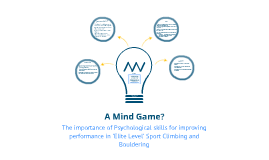
Transcript: The importance of Psychological skills for improving performance in 'Elite Level' Sport Climbing and Bouldering Define key aspects of title - 1st December 2012 Arrange athlete interviews - 24th December 2012 Explore and prepare body of research - 1st January 2013 Submit 500 word progress report - 5th January 2013 Conduct Athlete Interviews - February 15th 2013 Discuss personal experience relating to Interviews - February 25th Discuss relevant issues/weaknesses within interviews - March 1st 2013 Critically analyse and discuss athlete interviews - March 1st 2013 Produce Findings section March 25th 2013 Recommendation for further research - 1st April 2013 Submit Dissertation - May 2013 Thanks for Listening Any Questions? Improve my knowledge of the subject. Ultimately... What impact do psychological skills and techniques have on the performance of climbers? Library based research to support and iron out weaknesses within interviews Aims Potential lack of research directly relating to climbing Timetable Interviews with representative sample of 5 'elite level' climbers. Potential lack of access to 'elite level' climbers. Do 'elite level' climbers perceive this as being true? If there is a significant importance, what skills do they utilise? Potential for loss of focus and diversion from original aims. Substantial literature. Is there enough understanding by the general public? Problems? Introduction/Rationale Methodology Personal Experience added to interviews and research What level of importance do 'elite level' climbers place on psychological skills? Does this information relate to or reflect my own experiences? 'As physical as climbing is, it is even more mental' Horst (2010) A Mind Game? How does research literature support or reject their use of these skills?

Dissertation Proposal Presentation

Transcript: Call for support workers to work different, flexible hours. Rejects scientific methods WHY? Questionnaires Whitmore, E (2001) "People listened to What We Had to Say": Reflections on an Emancipatory Qualitative Evaluation. In Shaw, I and Gould, N (eds) Qualitative Research in Social Work. London:Sage I Think ... Carey, M (2012) Qualitative Research Skills for Social Work: Theory and Practice. Ashgate Publishing Limited: Surrey http://www.papworth.org.uk/downloads/disabilityintheunitedkingdom2012_120910112857.pdf Last accessed 15/11/2013 17:36 The Barriers to Participation in Mainstream Nightlife Activities for Learning Disabled Adults Registered Charity started by a punk rock band with disabled and non disabled members. Interviews My Research Questions. Found that lots of disabled people had to leave gigs and clubs early because of their support workers. Looks at important issues in society for disabled people. Participation -using community facilities and attending community events and activities alongside other members of society. References 1. What are staff attitudes around the participation of learning disabled adults in mainstream nightlife activities? Policies say that people should be free to choose how to live their lives and control over their lives. Questionnaires handed out physically and completed online. Practicalities My Sample Change staff attitudes. Interviewee's recruited via questionnaires - voluntary. Mainstream Nightlife Activities - Social life or entertainment activities that take place in society in the evening and late into the night. This can include, but is not limited to, the theatre, nightclubs and bars. Attitudes - a set way of thinking or feeling about something. Shearer, A (1984) Centre's for Independent Living in the US and the UK: An American Viewpoint. London:King's Fund Centre Defining the Terms Create policies and practices for change. Ethical Considerations More opportunities to access mainstream leisure and recreational activities and facilities. Use of Findings The Papworth Trust (2012) 82% of disabled adults experience barriers in accessing social activities in the community. As a result of this, they are significantly less likely to participate in nightlife activities. Anonymity and confidentiality of all participants in questionnaires and interviews. Bell, J (2005) Doing Your Research Project (4th Edition) Maidenhead: Open University Press Department of Health (2001) Valuing People: A New Strategy for Learning Disability for the 21st Century. London: Department of Health Questionnaires handed out in the new year. Resources and Timescales The Papworth Trust (2012) 1 in 4 disabled people feel that they don't have choices or control over their daily lives. Kemmis, S and Wilkinson, M (1998) Participatory Action Research and the study of Practice. In Atweh, B; Kemmis, S and Weeks, P (eds) Action Research in Practice Partnerships for Social Justice in Education (pp21-36) New York:Routledge Cresswell (2009) Advocacy/Participatory View. Disabled people have the right to stay up late and have control over their lives. Support workers from residential/supported living environments in Manchester. http://www.oxforddictionaries.com/definition/english/attitude Last accessed 15/11/13 at 18:42 Valuing People Now (2009) As many questionnaires returned as possible! Improving the lives of disabled people by providing them with a voice. Sensitive questions 2. How do these attitudes create barriers to participation and opportunities for participation in mainstream nightlife activities? Choice and Control Interviews completed by April 1st. The set of ideas and beliefs behind my project. Small amount of follow up interviews from variety of organisations/living settings. Hard copies handed out from and returned to service where steering group is based so no postal costs. Stay Up Late Equality Act (2010) London: HMSO Cresswell, J (2009) Research Design: Qualitative, Quantitative and Mixed Method Approaches. Sage Publications:London Encourage more research. Methods Supported by Mencap. Staff attitudes act as a barrier to inclusion. Working collaboratively. Equality Act (2010) services and public bodies should encourage participation in areas that are significantly low. Department of Health (2007) Putting people first: a shared vision and commitment to the transformation of adult social care, London: DH Voluntary participation Highlight barriers. Stalker, K and Harris, P (1998) The Exercise of Choice by Adults with Intellectual Disabilities: A Literature Review. Journal of Applied Research in Intellectual Disabilities. 11(1) pp 60-76 Steering Group Methodology Other staff issues, like working hours, also act as a barrier. http://stayuplate.org/ Last accessed 15/11/13 17:38 Practical Issues - Other issues involving staff but not related to their attitudes. For example working hours, transport, training and pay. 3. How do practical issues relating to staff help to create barriers to

Dissertation Presentation Template

Transcript: Hypothesis Confirmation The research confirms the initial hypothesis, demonstrating a significant correlation between the studied variables. Statistical Software Utilization New Insights Conclusion Utilized statistical software such as SPSS and R for quantitative data analysis, enabling robust statistical testing and interpretation. Key findings reveal new insights into the subject area, contributing to the existing body of knowledge and addressing identified gaps in the literature. Future Exploration Qualitative Methods Data Analysis The study highlights the importance of further exploration in this area, suggesting avenues for subsequent research and potential applications. Incorporated qualitative analysis methods, including thematic analysis and coding, to interpret open-ended survey responses and interviews. Data Visualization Employed visualization techniques, such as graphs and charts, to effectively convey the findings and trends observed during the analysis phase. Key Findings and Their Implications The research identified significant trends that align with the stated objectives, revealing insights that could influence future practices and theories in the field. These findings not only contribute to existing knowledge but also suggest areas for practical application and further investigation. Future Research Directions Exploring avenues for continued investigation based on dissertation findings. Year 1 Year 2 Year 3 Expand the study to include diverse populations to assess applicability and generalizability. Develop and test interventions based on findings to enhance effectiveness in real-world settings. Investigate the long-term impacts of findings on current practices in the field. Overview of Research Area and Significance Research Methodology Timeline Recent Contributions Seminal Works Column 2 discusses recent studies that address gaps identified in the foundational literature. These studies utilize modern methodologies and perspectives that are essential for advancing the field and informing future research directions. Column 1 focuses on seminal works that have laid the foundation for the research area, detailing their contributions and methodologies. These studies are critical for understanding the evolution of the field and provide a basis for current research questions. An overview of the chronological research design, data collection, and analysis techniques employed in the study. Phase 1: Research Design Engage and Inquire Developed the overall research framework, defining the study type and scope. This is an opportunity for the audience to ask questions and share their insights, fostering a deeper understanding of the dissertation's contributions and findings. This dissertation explores the impact of [insert research topic] on [insert broader field or context], emphasizing its importance in addressing contemporary issues. The significance of this research lies in its potential to contribute to [specific knowledge, practices, or policy improvements]. Identify Key Issues To identify and analyze the primary issues surrounding the chosen research topic, providing a clear understanding of the context and relevance. Evaluate Literature To evaluate existing literature and frameworks related to the topic, pinpointing gaps and opportunities for further exploration. Research Objectives Develop Methodology To develop a comprehensive methodology that allows for effective data collection and analysis, ensuring the validity and reliability of results. Articulate Expected Outcomes To articulate the expected outcomes of the study, providing a framework for assessing its impact and contribution to the field. Dissertation Presentation Template A guide to creating a 2003 PPT template specifically designed for dissertations.

Dissertation Proposal Presentation

Transcript: ENGINEERS: A PHEONOMENOLOGICAL STUDY OF THE EXPERIENCES OF MALE PERSISTENCE IN HIGHER EDUCATION Introduction Research Problem “Improving education in math and science is about producing engineers and researchers and scientists and innovators who are going to help transform our economy and our lives for the better.” – President Barack Obama Statement of the Problem Of great importance to the future of the United States economy is for higher education to produce and graduate more engineering students. There is a significant demand for engineers in the country and currently, the largest population of engineering students is male. Male students are not persisting and are not graduating at the rate they should. Kuzmak (2010) researched female engineers and concluded that pre-entry attributes, institutional experiences, and academic interactions (Tinto, 1994) with peers and faculty positively impact persistence in the engineering discipline. She recommended, in 2010, focusing on fewer attributes of Tinto’s (1994) retention model.... She further recommended the research be extended beyond females and minority students... Purpose Statement The purpose of this phenomenological study will be to understand persistence for male engineering students in higher education. At this state in the research, persistence is defined as the act of continuing steadily despite problems, obstacles, or difficulties (Tinto, 1994). Research Questions 1. What role do academic systems influences, which include academic performance and faculty interactions, play in males’ student persistence in engineering? 2. What role do social system influences, which include peer interactions and extracurricular activities, play in males’ student persistence in engineering? Literature Review Mann (1907) researched the present conditions of engineering education, sought out problems within engineering education, and provided a detailed summary of solutions. The Wickenden Study (1920) “was the most extensive ever undertaken of engineering education, making an effort to involve every American engineering school, representative of American industry, and the major professional engineering societies in all stages from data gathering to analysis to implementation of recommendations” (Marcus, 2005, p. 61). The Grinter Report (1955) recommended landmark enhancements to engineering curriculum. Those included the development of basic sciences in the curriculum, engineering analysis, design, and creative thinking (www.abet.org). Accreditation and Curriculum. The Accreditation Board for Engineering and Technology (ABET) provides strict guidelines for baccalaureate level degree programs in engineering. Criterion 1. Students. Criterion 2. Program Educational Objectives. Criterion 3. Student Outcomes. Criterion 4. Continuous Improvement. Criterion 5. Curriculum. Criterion 6. Faculty. Criterion 7. Facilities. Criterion 8. Institutional Support. The population of engineering students was 420,685 in 2010, while 81.9% are males and females make up only 18.1% of the population (Gibbons, 2010). (Seymour and Hewitt (1997) found the difficulty of the majors, ...grades and grade point averages were listed by 23% of the students as to why students changed majors ...the weed-out mentality in S.M.E. majors to be prominent and students felt that the academic system was set up to get them to change majors... A phenomenological study attempts “to understand the meaning of events and interactions to ordinary people in particular situations” (Bogdan & Biklen, 2003). The purpose of this qualitative phenomenological study is to understand the persistence of male undergraduate engineering students in higher education. The data will be collected through one-on-one, in person interviews...this will provide an opportunity to ask open-ended questions and gather specific stories and perspectives from the participants (Creswell, 2009). The findings will be written in narrative form and will seek to bring the participants’ stories to life. The findings will be listed under three analyses: the participants, the extracurricular inventory, and the interviews. Questions!?! Methodology

Dissertation Proposal Presentation

Transcript: Personal interest Language skills Geographic location ideal Use of personal network Future research interests Presents a new perspective in kin-national research Interesting research for: governments, IGOs, NGOs, think tanks Methodology History of Hungary, Serbia Other academic work on Slovakian- and Romanian-Hungarian relations Both countries have strong records of kin-national policies Vojvodina Autonomous Province Inter-ethnic relations versus bilateral relations Serbian integration with the European Union Why have relations between Serbia and Hungary been different than other bilateral relations in the larger region, relating specifically to kin-national issues? Why has Serbia's approach to Hungarians in Vojvodina AP been different than other ethnic groups in Serbia and the former Yugoslavia? Has Hungary had an effect on Serbia's domestic minority policies especially its power vis-a-vis the EU accession process? What have Serbian reactions been from Belgrade and Novi Sad to Budapest? How have they been similar? How have they differed? Content Analysis Open source documents (e.g., newspapers, periodicals, journals, &c.) Academic resources Public records and policy documents Legislation Interviews with political elite (e.g., national and local politicians, NGO staff, government experts, academic experts, &c.) Comparative qualitative analysis of prior government relations/reactions (i.e., other cases of foreign relations) Possibly anthropological observations/oral histories, depending on contexts of inter-ethnic relations in Vojvodina. Joseph Davis, IMRCEES 2012-14 14 May 2013 Adviser Dr. Eamonn Butler Background Information Hungarian-Serbian Relations Focuses on Hungarian laws about kin-nationals Analyses Hungarian relations with Slovakia and Romania Focuses on the Wars of Yugoslav Succession and Serbian support of kin-nationals Supra-national focus on the European Union as a tool for policy, minority rights cannon Limited work on Hungarian-Serbian kin-national issues Research Question and Hypothesis Obstacles to Research Language Gaining access for interviews, usefulness of information gathered in interviews Accessing information Geography Literature Rationale Kin-National Policies and Bilateral Relations

Now you can make any subject more engaging and memorable